Dry vs. Dehydrated Skin: Why Your Skin Feels Tight in Fall

As the weather gets cooler and the heat comes on indoors, many clients at my Burnaby studio start noticing the same changes: skin that feels tight after cleansing, looks a little dull, or never seems completely comfortable no matter how much moisturizer they apply.
The first thing I look at is whether the skin is dry, dehydrated, or experiencing a bit of both.
They can feel very similar, but they are not the same thing. Understanding the difference can help you choose the right skincare instead of simply adding more products.
Dry Skin vs. Dehydrated Skin: What’s the Difference?
Dry skin is a skin type. It naturally produces less oil, which means the skin has fewer of the lipids that help keep the surface soft, comfortable, and protected. Dry skin may feel rough, look flaky, and tend to stay dry throughout the year.
Dehydrated skin is a skin condition. It is lacking water rather than oil, and it can happen to any skin type, including oily and acne-prone skin.
Dehydrated skin may feel tight, look dull, or show fine lines more easily. Some people also notice that their skin feels tight underneath but becomes oily on the surface.
In simple terms:
Dry skin lacks oil. It is usually a longer-term skin pattern and may feel rough or flaky.
Dehydrated skin lacks water. It can come and go depending on your environment, skincare routine, and skin condition.
You can have both at the same time. This is especially common during fall and winter when the skin barrier is under more stress.
Why Your Skin Feels Tighter in the Fall
A rainy Vancouver fall may feel humid outside, but your skin spends a lot of time indoors.
Indoor heating, hotter showers, seasonal temperature changes, and lower indoor humidity can all increase moisture loss from the skin.
Your skincare routine matters too. A cleanser that is too stripping, frequent exfoliation, or continuing strong active ingredients when the skin is already stressed can make it harder for the skin to hold onto water.
That is why sometimes the answer is not another hydrating serum. If your skin feels tight again shortly after moisturizing, I also want to look at how well your barrier is actually holding that hydration in.
Why the Skin Barrier Matters
Your skin barrier plays a major role in keeping moisture inside the skin and protecting it from external irritation.
When the barrier is functioning well, the skin is better able to maintain hydration and stay comfortable. When it becomes compromised, water escapes more easily and products that used to feel completely fine may suddenly sting or feel irritating.
This is also why layering more and more hydrating products does not always solve dehydration.
Ingredients such as glycerin and hyaluronic acid can help attract and hold water, while ceramides and other barrier-supportive lipids help reinforce the skin's protective structure.
But no single ingredient fixes everything. The condition of your skin, the products around it, how often you are exfoliating, and what treatments you have recently had all matter.
If your skin is already struggling, sometimes simplifying the routine is more helpful than adding another active.
To learn more, read my post on why barrier repair should be your first skincare priority.
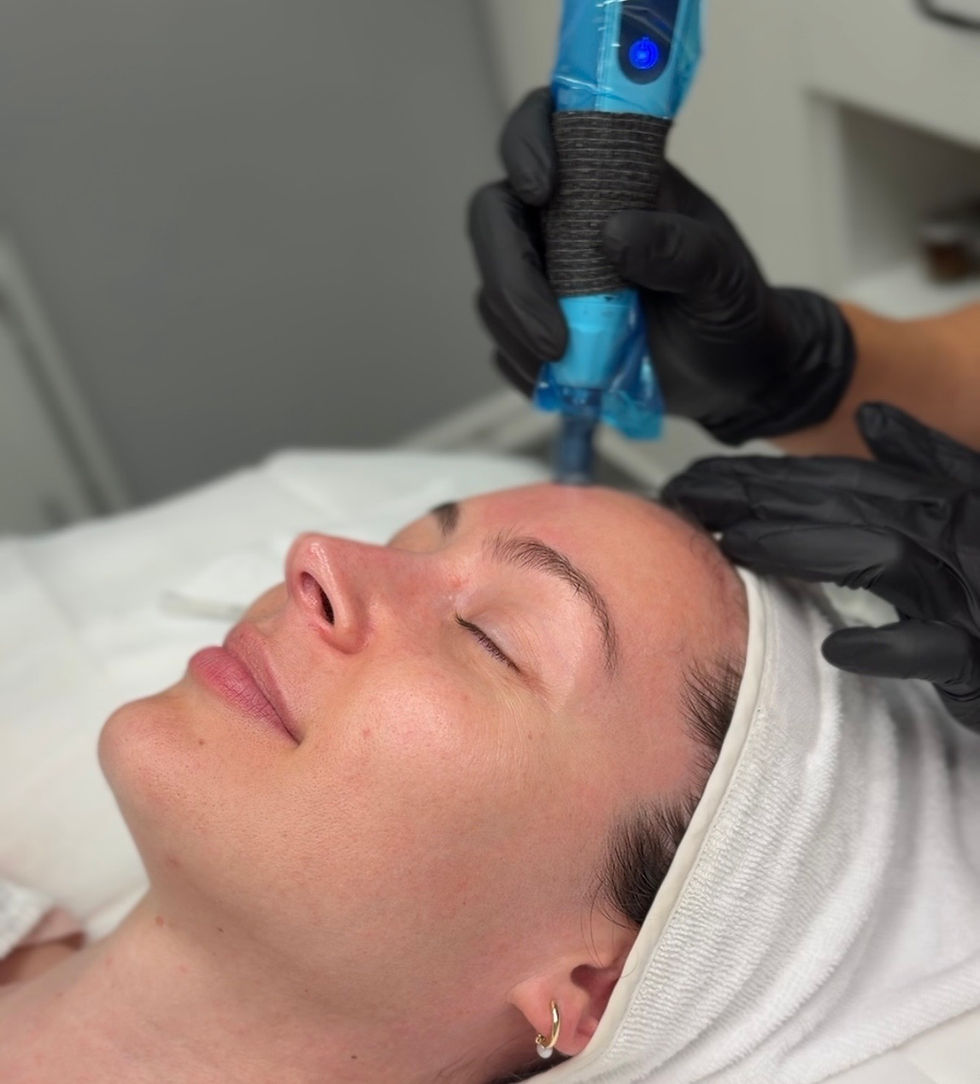
How I Care for Dry and Dehydrated Skin in the Studio
Every appointment starts by looking at what your skin can comfortably handle that day.
If the barrier looks stable, we may focus more on hydration, texture, and glow.
If the skin is feeling tight, reactive, warm, or easily irritated, I take a more recovery-focused approach first. Brightening, exfoliation, or stronger treatment steps can always be added later when the skin is ready for them.
Depending on your skin's condition, your facial may include:
Gentle cleansing without unnecessarily stripping the skin
Barrier-supportive and calming professional skincare
Hydrating and soothing treatment steps selected for your skin that day
Professional ultrasound as part of a hydration and recovery-focused treatment
A hydrating mask with LED for a calm, comfortable finish
Treatment intensity is always adjusted according to the skin in front of me.
Sometimes the best treatment is doing more. Sometimes it is knowing when not to.
The goal is not to make your skin feel like it went through the strongest facial possible. It is to help it become more stable, comfortable, and resilient over time.
Simple Ways to Support Dehydrated Skin at Home
Choose a gentle cleanser that does not leave your skin feeling tight after washing.
Use lukewarm rather than very hot water.
Apply your moisturizer before the skin feels completely dry after cleansing.
Look for formulas that combine humectants such as glycerin or hyaluronic acid with barrier-supportive ingredients such as ceramides.
Reduce exfoliation temporarily if your skin feels tight or irritated, instead of trying to exfoliate the dryness away.
Reintroduce active ingredients gradually once your skin feels comfortable again.
Continue wearing sunscreen, even during grey Vancouver days.
Use a humidifier if indoor heating makes the air in your home very dry.
If dryness is accompanied by persistent itching, significant scaling, cracking, or a rash, it is best to speak with a physician or dermatologist. Conditions such as eczema require medical assessment rather than simply adding skincare.
FAQ
Will Drinking More Water Fix Dehydrated Skin?
Drinking enough water is important for your overall health, but drinking extra water alone does not usually solve surface dehydration.
Your skin's ability to hold onto water also depends on the condition of the barrier and the products you use on it. Gentle cleansing, appropriate hydration, and a moisturizer that reduces moisture loss are usually more relevant to what you feel on the surface.
Can Oily Skin Be Dehydrated?
Yes. Oil and water are two different things, so oily skin can still be dehydrated. In fact, some dehydrated skin feels tight after cleansing but becomes shiny again later in the day.
In that situation, stripping the skin even more because it looks oily can sometimes make the cycle worse.
How Do I Know If My Skin Barrier Is Compromised?
Tightness after cleansing, unusual sensitivity, redness, heat, flaking, or products suddenly stinging can all be signs that your skin is under stress.
One symptom by itself does not necessarily mean your barrier is damaged, which is why I look at the overall pattern rather than one sign alone.
How Often Should I Get a Facial for Dry or Dehydrated Skin?
There is no single schedule that works for everyone.
At your first visit, I look at your current skin condition, sensitivity, home routine, recent treatments, and goals before suggesting how often professional treatments actually make sense.
The goal is not to fit your skin into a treatment schedule. The treatment schedule should fit your skin.
Book a Facial for Dry or Dehydrated Skin in Burnaby
If your skin feels tight, dull, reactive, or simply different from how it normally feels, you do not have to guess which treatment it needs.
At Allure Beauty Bar, every first visit starts with a skin assessment so I can understand what your skin is doing now before deciding how to treat it.
My private, one-on-one skincare studio in Burnaby is open by appointment only.
New clients can start with an Intro Offer, which includes an additional 15-minute consultation and same-day skin assessment:
60-minute Bespoke Facial + consultation: $189
90-minute Bespoke Facial + consultation: $249
Have another skincare question? Explore the Skin Dictionary for straightforward answers to common skin concerns.


Comments